
Antique Clock — “A surprise for Dad”
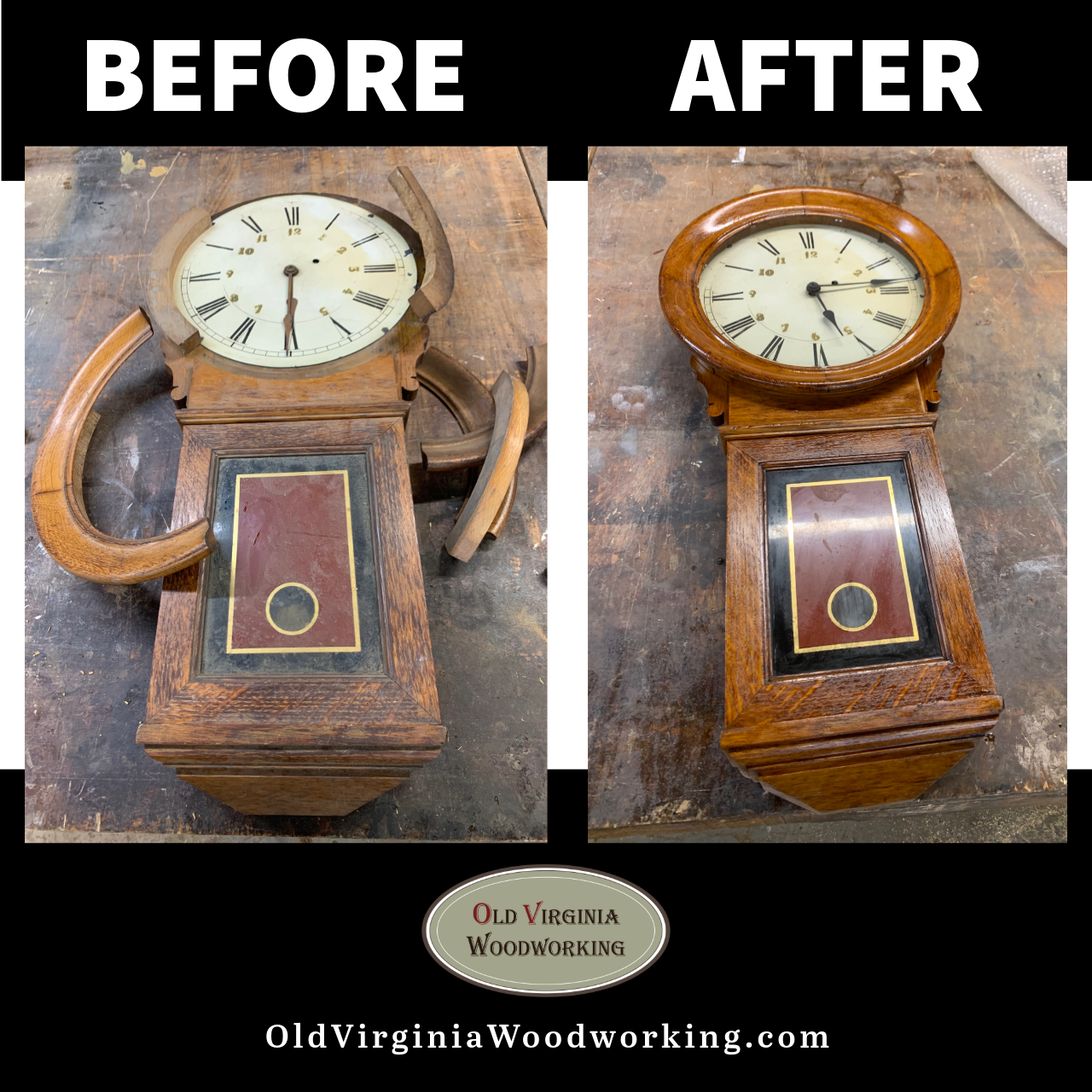
This clock came into the shop as a rebuild and refinish project. The lady who brought it in wanted two pieces (a desk and the clock) completed. They were surprises for her father who she mentioned ‘is about your age’. The desk was a piece he made as his first woodworking project in high school. It got pretty beat up and broken after over five decades. To my regret, I forgot to take any photos of the desk. I often forget to take photos. It’s the kind of deal where you kick yourself in the shins for being forgetful. Nevertheless, we did get several photos of the clock along the way.
Some assembly required
The clock was to be a birthday present for her father. When the lady packed that pile of pieces in and stacked them on my workbench it was a little hard to tell how to reassemble the broken-up thing. All the trims around the clock face were broken off, the old glue kind of dissolved I guess.
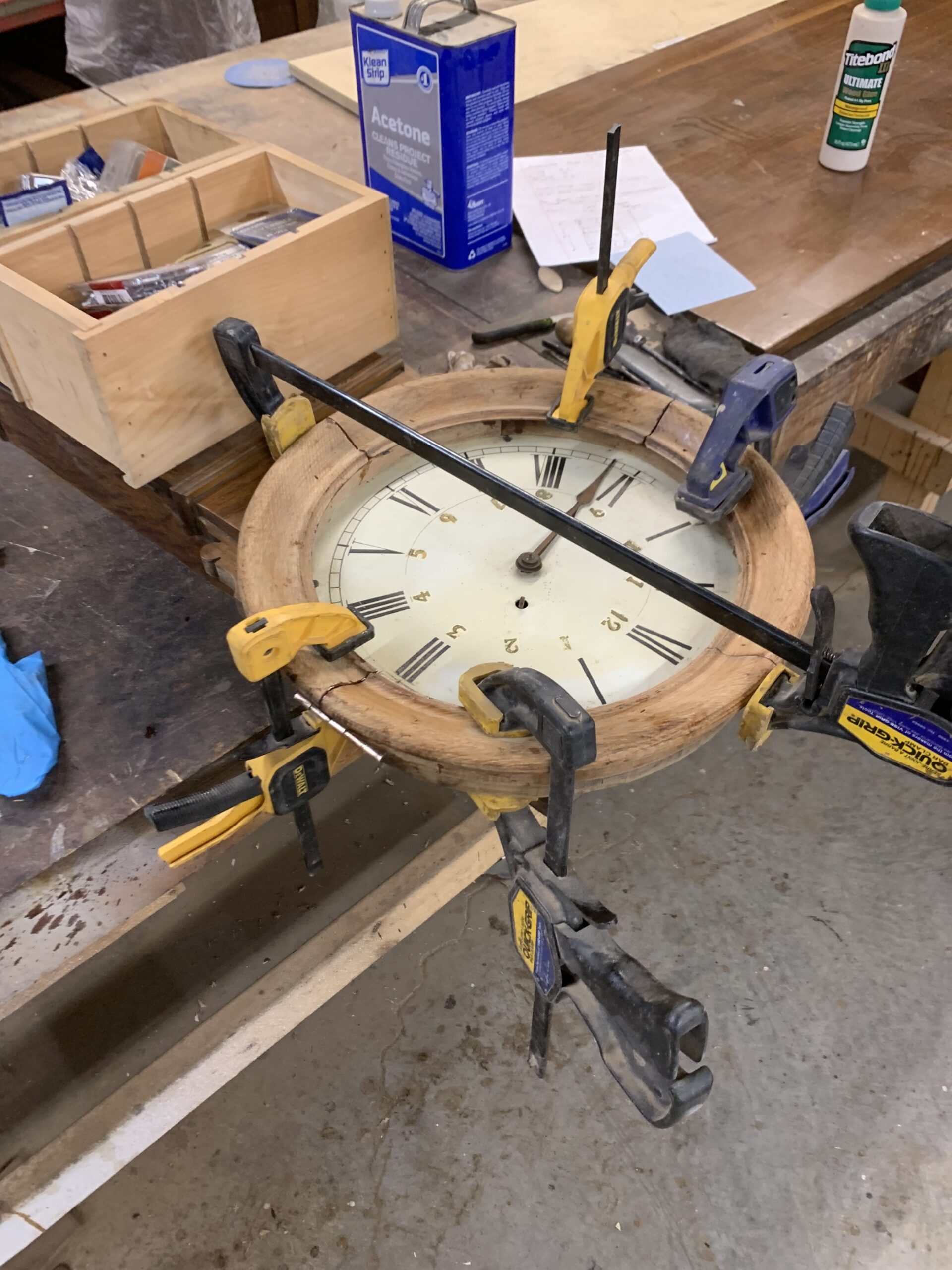
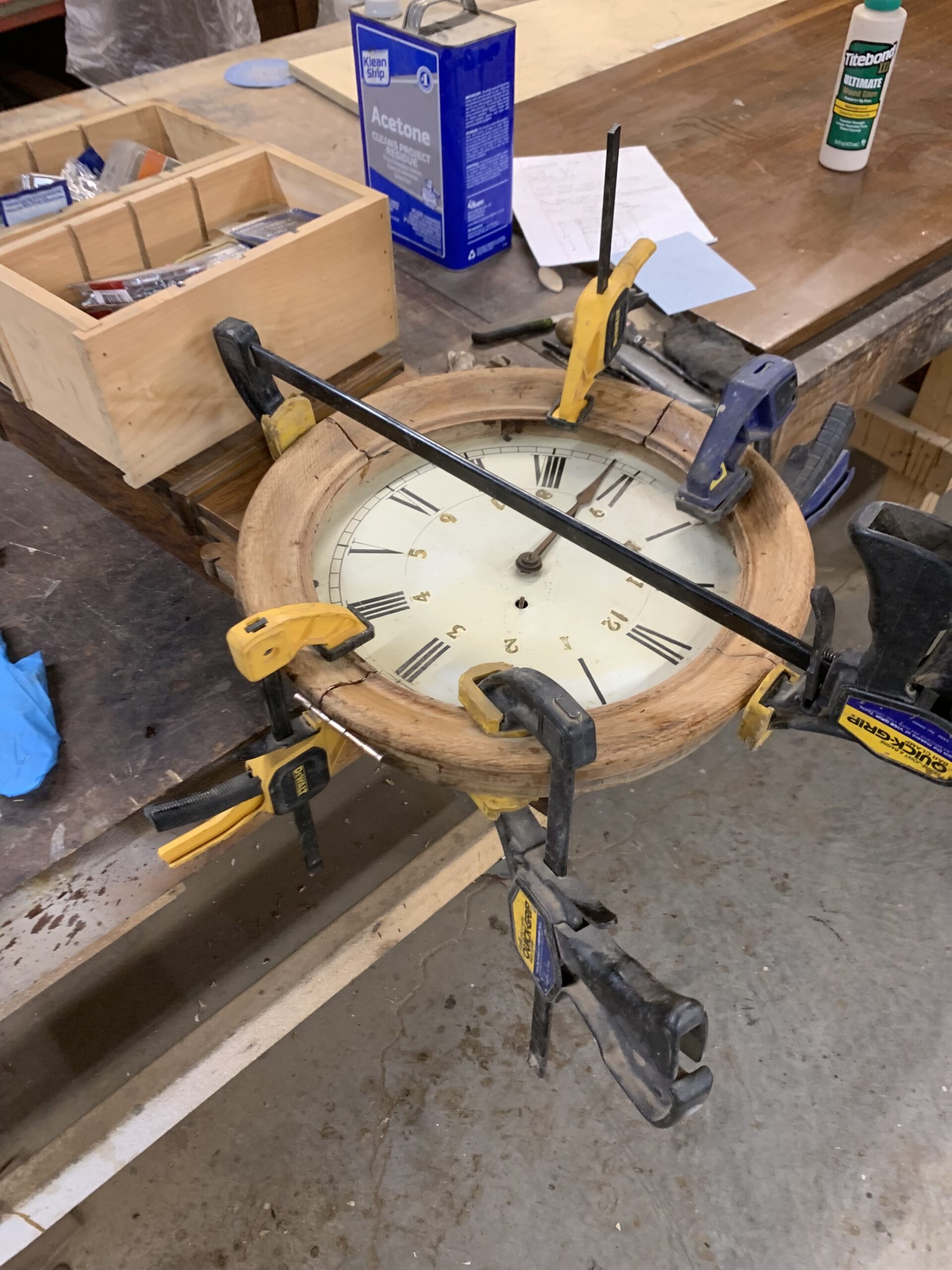
When I went to work on it I picked around here and there trying to figure out how those pieces went back together. I found a black lump along the left side and started picking at it. That was when I discovered it was a hinge! Man, it was completely frozen in time. I soaked it in solvents and scrubbed it with fine steel wool. It started to budge a little, then it crept open. Eventually that hinge worked like new and the original finish was still pretty good under all the gunk. So, I figured out that the loose clock trims actually assembled into a round door for the clockface.
A facelift for this antique beauty
There was no glass in that clockface door but I found traces of old finish and a couple of those tiny steel triangles, called glaziers’ points, that they used to use to hold glass into an opening. You can still buy those and I stock them in my shop. I priced the cost of that 12-1/8” diameter glass and found it so cheap I just told the guy to make it. Then I contacted the customer and asked her if she wanted to get glass for that door for under $18, bring it to my shop, and I would install it for free. She was thrilled.
The new glass fit perfect when it arrived. I popped it in place, tapped a few glaziers’ points behind it, and voila, that 150-year-old clock sure came to life. I am guessing now that the original clock door assembly probably had a bead of glazier’s compound packed in around the edge of the glass. I never even thought about that until the unit had been picked up and gone.
The pre-repairs clock face was stained and dirty and it looked pretty bad. The challenge was to clean off the grime without damaging the original numeral decals and background white paint. I started cleaning with mild soapy water but that accomplished nothing. Then I tried my most trusted general cleaner, paint thinner. One thing I like about paint thinner is that is dissolves a wide variety of dirty marks and residues but has never, in my experience, damaged an underlying solid surface or even carpet. It was, however, another failed effort. That dirty face remained solidly soiled.
The next strongest cleaner in my refinisher’s chemical resources is brush cleaner. Brush cleaner is pretty potent. It’s highly flammable (think gasoline), smells strong, and it sure burns if you get it in an open cut – it also dissolves all the thinner plastic and nitrile gloves in the shop. The good news is that with some careful scrubbing with 00 steel wool the old paint splatters and shellac finish messes started to loosen up and go away. It came out pretty clean, though not like new. After a while the decal numerals began to wash away so it was time to quit that business. I am certain you can still buy those decals new but my customer did not want that.
Looking sharp!
Oh—you might wonder why an old clock would have a hinged door over the clock face. The reason is that the clock had to be wound up to work. The key hole for winding was in the clockface and the door was there to protect both the clockface and to allow access to the keyhole.
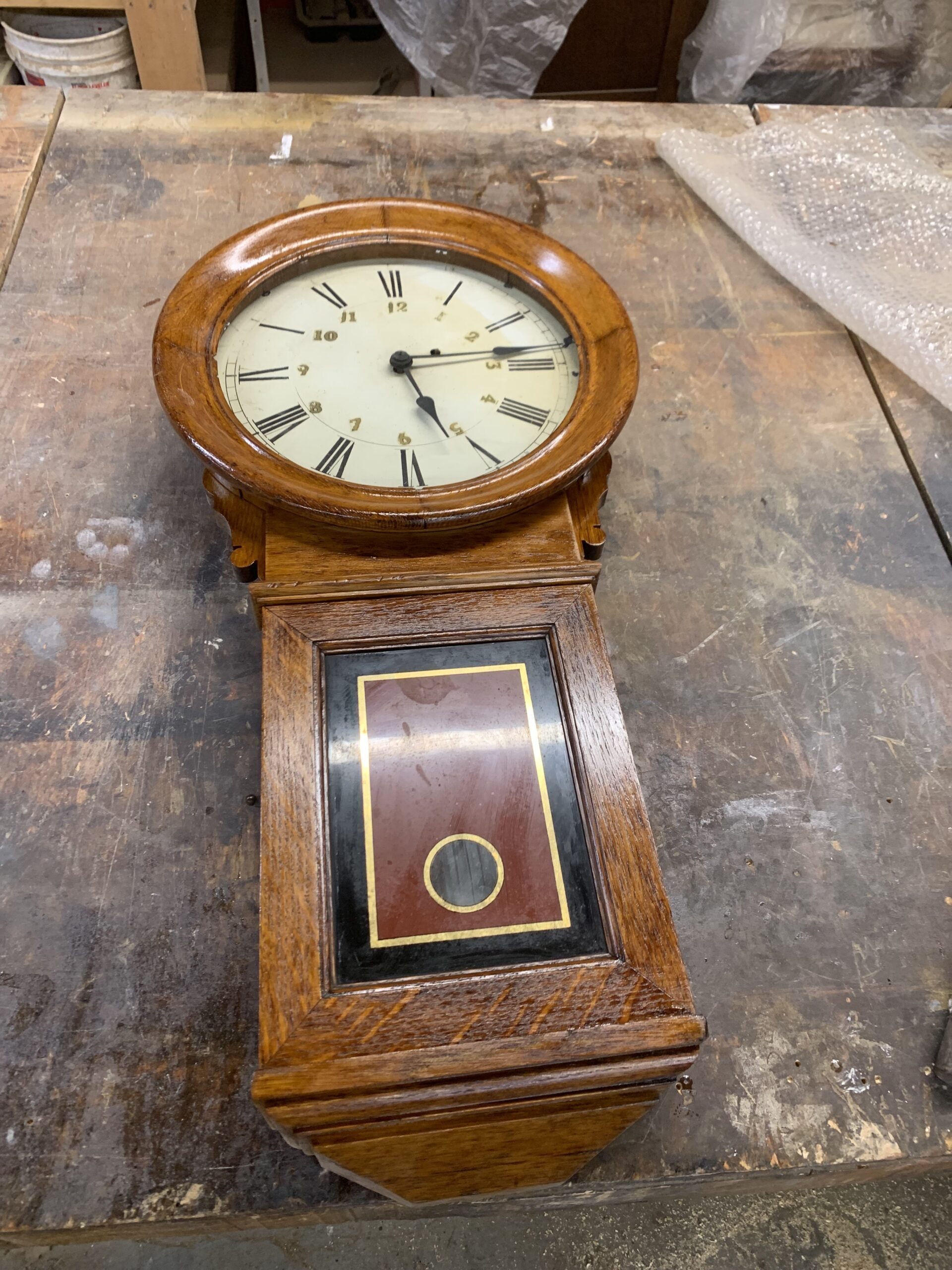
The project turned out nicely and the customer was brightly happy. She mentioned, now that the clock case was all restored, it looked sharp enough that maybe she would try to find someone to repair the clock’s works. I am certain there are guys out there who can do that repair. But this old guy (her father’s age) will leave that for somebody with clockwork’s repair experience.